


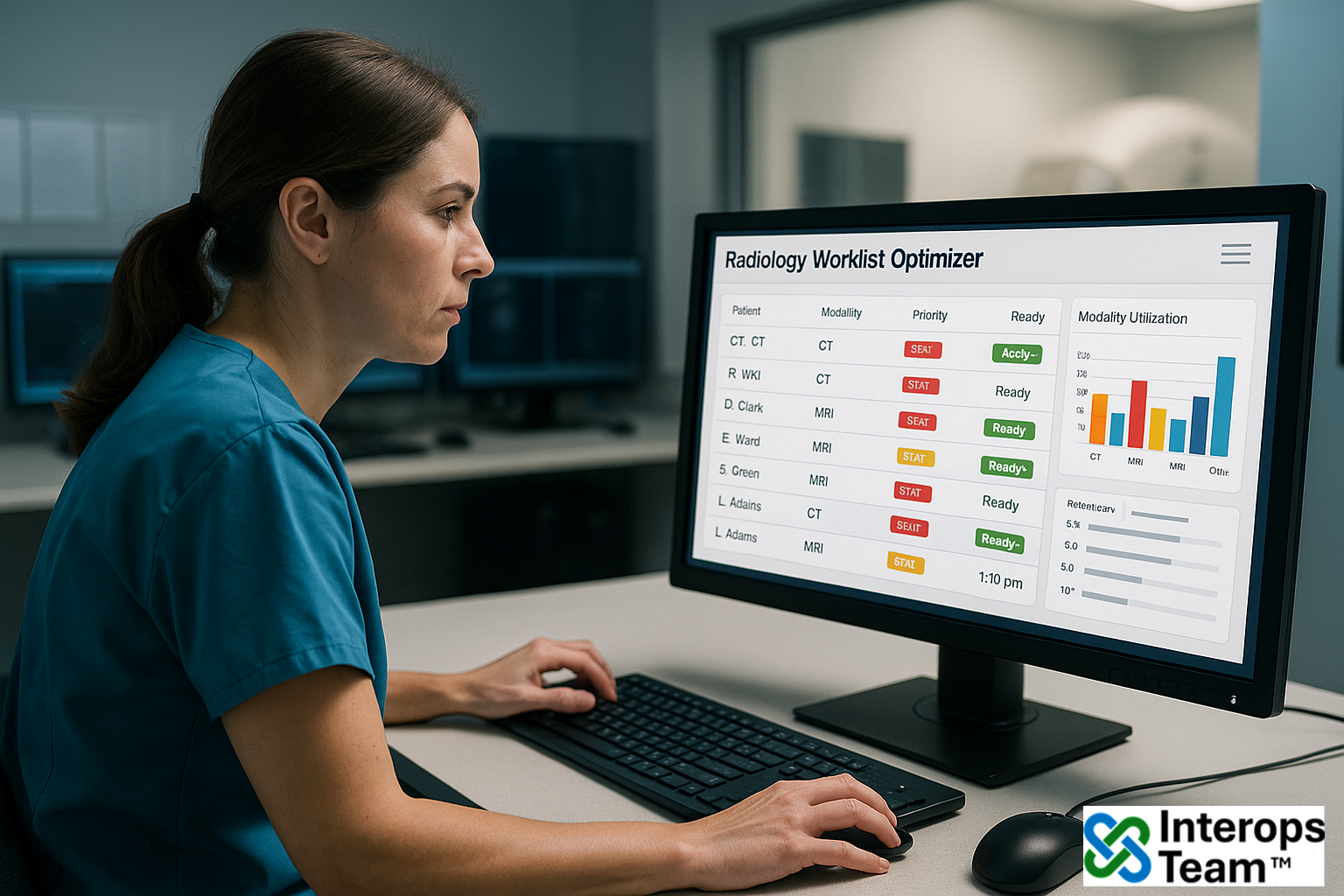
The Radiology Readiness & SLA Visibility Assistant exposes patient readiness and service-level metadata inside the EMR, giving ordering and clinical teams real-time insight into imaging workflow status. It surfaces readiness indicators (e.g., contrast prep, NPO compliance, transport status) and SLA timers for orders approaching threshold, helping teams coordinate earlier without requiring RIS-side sequencing control.
By leveraging HL7v2 event messages and CDS Hooks triggers, the assistant bridges operational gaps between order entry, preparation, and imaging completion.
Teams can quickly spot patients who are not yet ready for imaging, or identify when SLA-sensitive exams are at risk of delay.
Benefits
- Improved coordination: Enables earlier communication between nursing, transport, and radiology teams by surfacing readiness and contrast prep status in real time.
- Reduced turnaround delays: Identifies readiness or scheduling blockers before they impact throughput.
- Stronger SLA adherence: Tracks imaging orders against defined time targets with alerting and audit visibility.
- Operational transparency: Provides clinicians and coordinators a shared view of patient and exam readiness across systems.
Capabilities
- Readiness indicators: Parses
HL7v2status events (e.g., contrast prep, transport dispatched, patient arrived) and displays within the EMR. - SLA monitoring logic: Uses
CDS Hooksto trigger alerts for SLA-sensitive or delayed imaging orders. - Contextual alerts: Flags patient or modality readiness issues based on prep requirements, consent status, or pending labs.
- EMR-side dashboards: Summarizes SLA trends, bottlenecks, and readiness statistics across locations or modalities.
- Audit and governance tracking: Maintains time-stamped metadata for accountability and process improvement reviews.
Great for
- Clinical Informatics and EMR Analysts: Integrate readiness and SLA visibility into EMR workflows using
HL7v2andCDS Hookswithout altering RIS scheduling or slotting logic. - Providers and Care Team Leads: Identify readiness gaps (e.g., contrast prep, missing labs, patient NPO status) early to reduce imaging delays and improve coordination.
- Radiology Operations and Compliance Teams: Monitor SLA compliance, track throughput patterns, and generate defensible audit reports using EMR-side metadata and rule-based triggers.
- Quality and Patient Flow Committees: Use SLA data to refine imaging prioritization policies and identify recurring bottlenecks across service lines.
Interops Team integrates HL7v2 readiness indicators and CDS Hooks logic into EMR workflows, enabling SLA-aware imaging coordination and operational transparency without disrupting RIS control.