


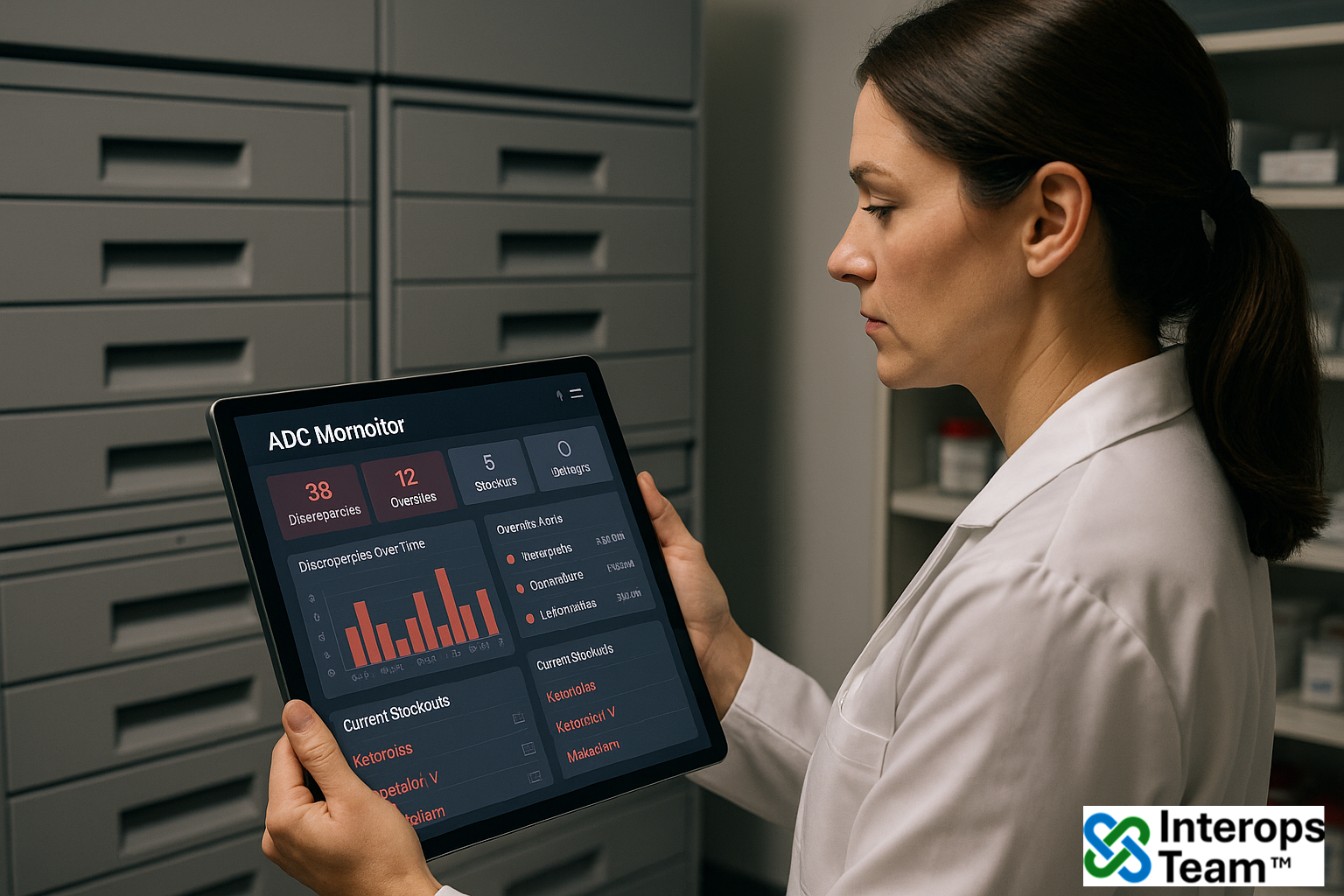
The ADC Discrepancy Visibility Assistant enhances transparency between nursing and pharmacy teams by surfacing real-time discrepancy and override indicators from automated dispensing cabinets (Pyxis, Omnicell, etc.) directly within the EMR.
It interprets HL7v2 and vendor-specific event feeds to highlight exception states, delay risks, and unresolved cabinet transactions, without managing inventory control, restocking, or device-level workflows.
By mapping inbound ADC events into EMR-side dashboards and applying configurable policy thresholds, this tool enables faster issue resolution, proactive diversion oversight, and defensible discrepancy tracking across nursing units and pharmacy operations.
Benefits
- Improved frontline visibility: Displays real-time ADC discrepancy, override, and stockout indicators within the EMR workspace.
- Faster incident response: Enables nursing and pharmacy staff to coordinate resolution before discrepancies impact care delivery.
- Audit and compliance readiness: Creates traceable, policy-aligned exception logs for diversion review and accountability.
Capabilities
- Inbound ADC event mapping: Normalizes HL7v2 and proprietary feed data for cabinet transactions and exception states.
- Policy-based alert logic: Flags discrepancies and overrides using configurable thresholds by cabinet type, unit, or medication class.
- EMR-side dashboards: Presents aggregated discrepancy visibility without exposing ADC platform credentials or user context.
- Location-based exception routing: Directs flagged events to the appropriate nursing or pharmacy worklists for timely resolution.
Great for
- Clinical Informatics and EMR Analysts: Integrate ADC discrepancy and override alerts into EMR dashboards using HL7v2 event mapping and policy logic.
- Nursing and Pharmacy Teams: Monitor medication access issues and coordinate faster cabinet discrepancy resolution without toggling between systems.
- Compliance and Diversion Oversight Leads: Track high-risk cabinet events and generate audit-ready reports to support controlled substance governance.
- Quality and Safety Officers: Identify systemic cabinet or workflow issues using EMR-side analytics and escalation triggers.
Interops Team integrates HL7v2 and ADC event visibility into EMR dashboards, enabling cross-disciplinary transparency, faster resolution, and defensible medication access oversight.