


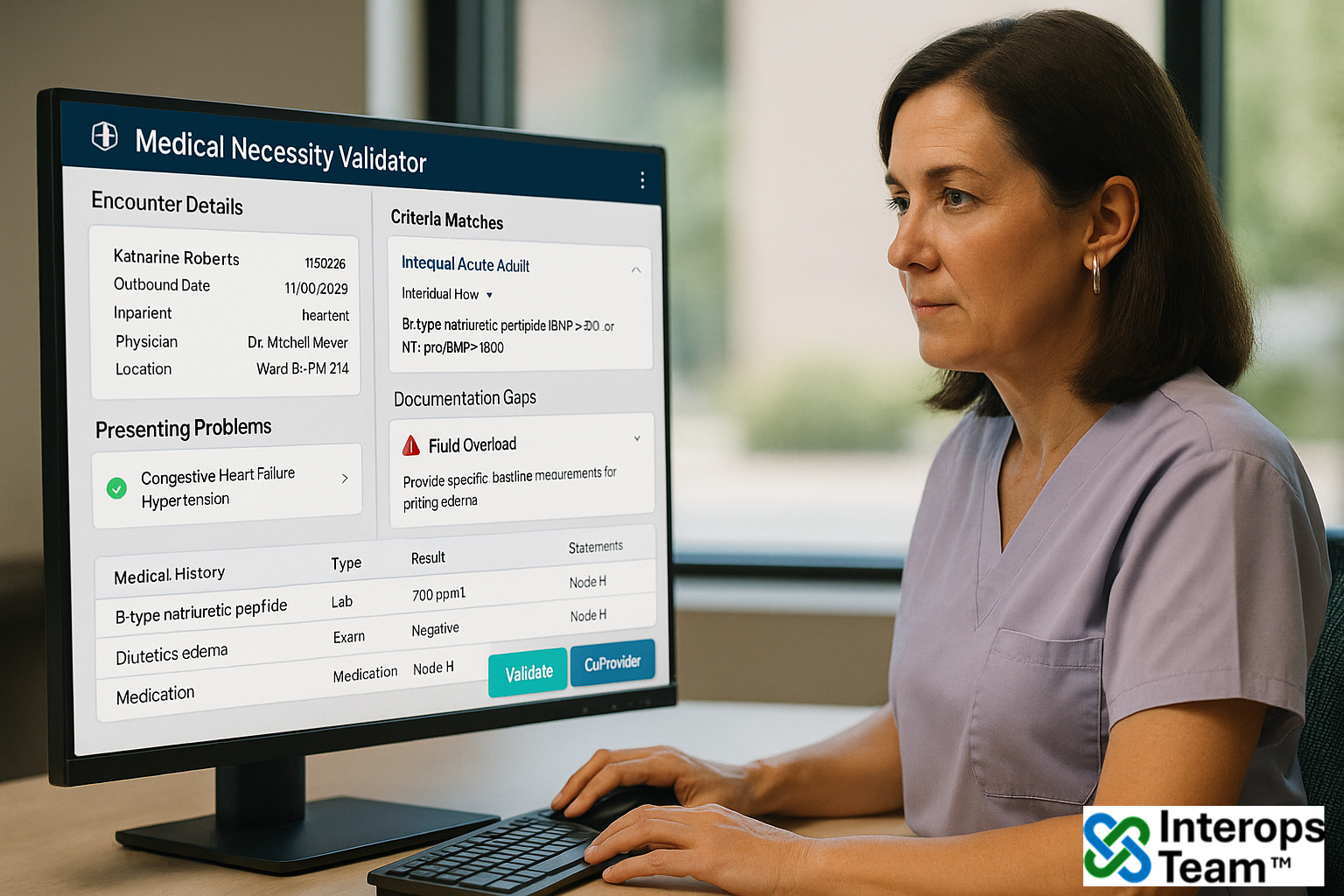
The Medical Necessity Validator provides a structured, defensible workflow for documenting inpatient versus observation status decisions. It walks reviewers through InterQual or MCG criteria step-by-step, captures findings with supporting evidence, and produces a consistent recommendation record for both providers and payers.
This application ensures every review is documented the same way, clear, complete, and auditable. It ties clinical rationale directly to the evidence reviewed, reducing the gray areas that lead to denials or retrospective disagreements.
Benefits
- Consistent, defensible reviews: Every determination follows the same logic path, minimizing subjectivity and reviewer variance.
- Clear provider guidance: Outputs structured recommendations (admit vs. observe) with rationale and links to supporting criteria.
- Appeal-ready documentation: Maintains a complete record of findings, evidence, and provenance for internal and payer audits.
- Time savings: Reduces manual note-writing through automated recommendation summaries and standardized capture templates.
Key Capabilities
- Criteria checklist workflow: Step-by-step InterQual or MCG capture process with configurable rule sets per payer or service line.
- Evidence link-out: Integrates clinical data, labs, and imaging to substantiate criteria fulfillment with provenance tagging.
- Recommendation generation: Automatically produces a structured “Meets / Does Not Meet” summary with rationale and reviewer signature.
- Provenance and audit traceability: Captures timestamped reviewer actions, versioned criteria references, and source citations.
- Integration with Status Manager & Concurrent Review Console: Syncs recommendations and timestamps directly to related workflows for continuous utilization tracking.
- Analytics and variance reporting: Identifies outlier decisions and tracks status reversals or payer disagreement patterns over time.
Great for
- Utilization Review Nurses and Case Managers: Capture InterQual or MCG findings with structured recommendations, evidence links, and rationale to support inpatient versus observation decisions.
- Health Information Management (HIM) and Compliance Teams: Ensure consistent reviews and appeal-ready documentation using criteria checklists, provenance-tagged recommendations, and evidence traceability tools.
- Clinical Informatics and EMR Analysts: Govern criteria logic, monitor recommendation fidelity, and surface documentation gaps using dashboard overlays and status-alignment analytics.
- Revenue Integrity and Appeals Teams: Leverage structured necessity documentation to expedite appeal packet assembly and defend determinations with payer-aligned evidence.
Interops Team helps hospitals standardize medical necessity workflows, transforming subjective reviews into structured, defensible, and appeal-ready determinations.