


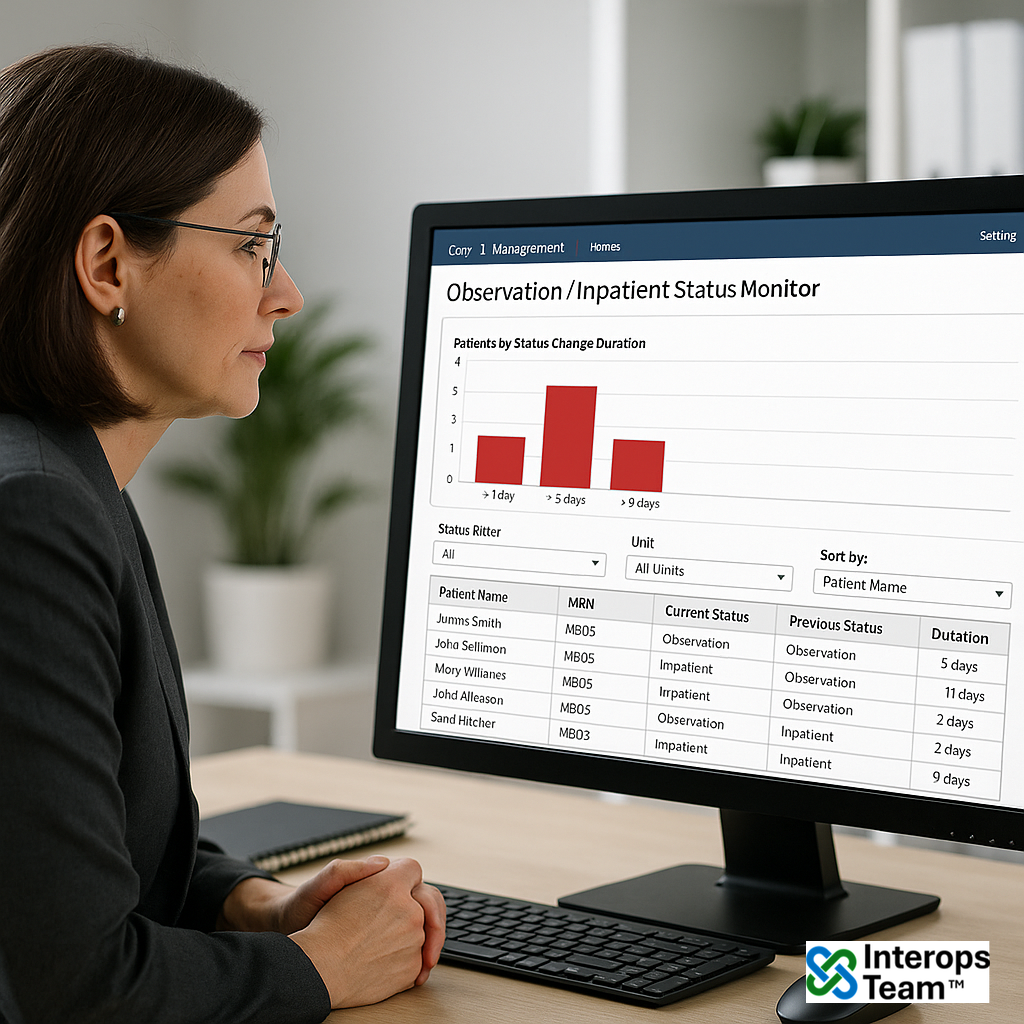
The Observation vs. Inpatient Status Monitor keeps real-time watch over status timing, criteria, and documentation alignment. It aggregates utilization signals, length of stay, InterQual or MCG findings, and Two-Midnight rule thresholds, to identify when a patient’s status may need review or documentation reinforcement.
Instead of discovering status issues after discharge, UR nurses and case managers receive proactive prompts while the patient is still admitted. The system ensures timely provider engagement, proper status determination, and audit-ready documentation, all before revenue integrity is jeopardized.
Benefits
- Fewer status errors: Detects timing and documentation risks before they result in denials or post-discharge rework.
- Improved reimbursement accuracy: Aligns clinical status and payer rules to ensure compliant billing and fewer retroactive corrections.
- Earlier course correction: Provides real-time prompts to UR and providers when documentation or criteria diverge from payer policy.
- Audit defensibility: Maintains traceable records of every status prompt, clock, and action for appeal and compliance review.
Key Capabilities
- Clock and threshold monitoring: Tracks elapsed stay time and triggers alerts as patients approach or exceed Two-Midnight rule boundaries.
- Status signal aggregation: Combines utilization review findings, clinical criteria, and payer requirements to identify high-risk encounters.
- UR review queue integration: Routes cases requiring reassessment directly into the UR queue with supporting evidence and timestamps.
- Provider prompts and nudges: Sends secure notifications for documentation clarification or status update requests, ensuring timely resolution.
- Audit-ready logging: Records all alerts, decisions, and follow-up actions for compliance tracking and retrospective analysis.
- Cross-console sync: Connects with Medical Necessity Validator, Denial Prevention Tracker, and Status Manager for end-to-end visibility.
Great for
- Utilization Review Nurses and Case Managers: Track status risks and timing thresholds that impact reimbursement, with automatic prompts for documentation updates and UR review aligned to the Two-Midnight rule.
- Health Information Management (HIM) and Revenue Integrity Teams: Reduce status errors and strengthen audit readiness using clock-based alerts, criteria aggregation, and structured escalation workflows.
- Clinical Informatics and EMR Analysts: Govern status monitoring logic, analyze documentation fidelity, and surface timing breaches using dashboard overlays and UR queue metrics.
- Compliance and Payer Relations Teams: Use data from the status monitor to validate adherence to payer rules and improve transparency during audits or appeals.
Interops Team helps organizations turn utilization rules into real-time safeguards, catching status and documentation risks before they reach the denial stage.