


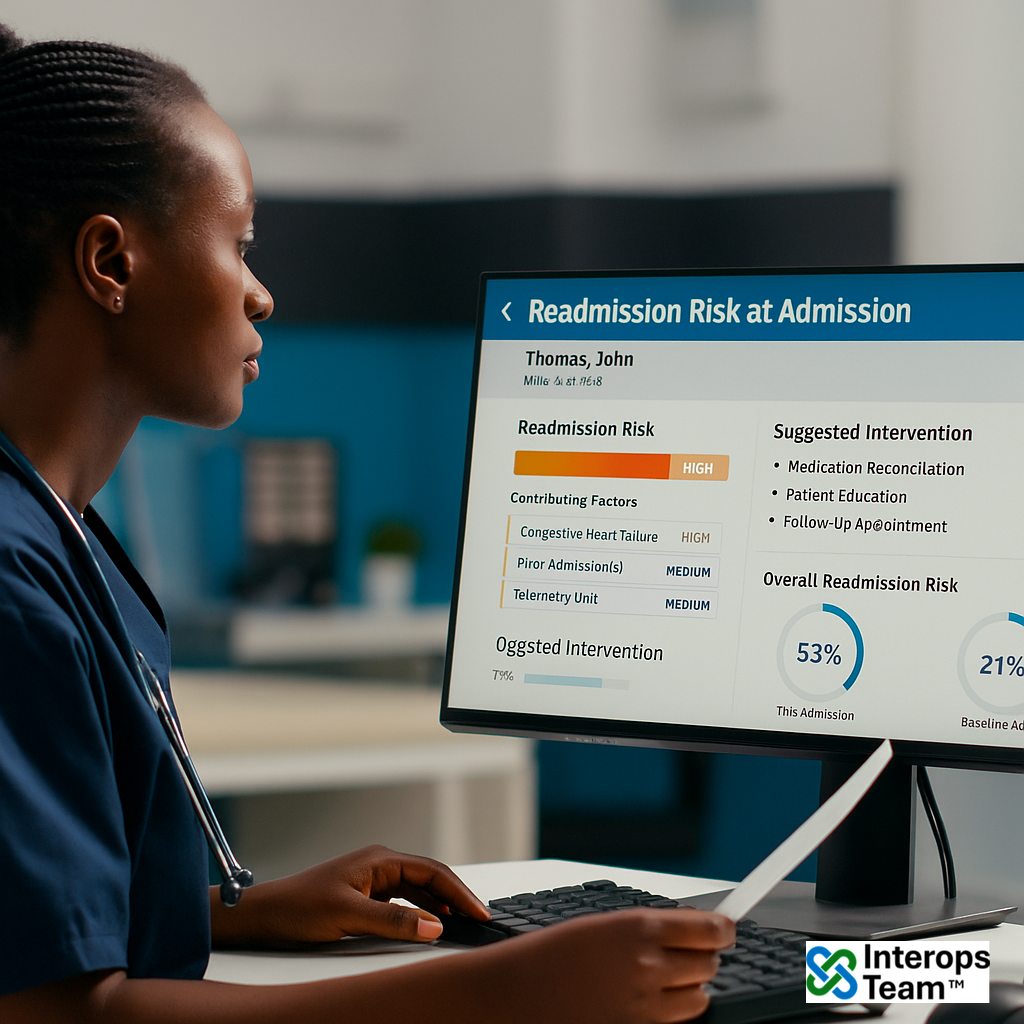
The Readmission Risk at Admission module gives care teams a head start on prevention by identifying high-risk patients the moment they’re admitted. It combines EMR data, social determinants, and prior utilization history to generate a real-time risk score and recommends actionable interventions before discharge planning even begins.
By integrating predictive modeling into the admission workflow, the system flags patients who are most likely to bounce back within 30 days and automatically launches the appropriate mitigation bundle, education prompts, medication reconciliation reviews, or care coordination consults. This proactive approach reduces rework, supports compliance with quality programs, and keeps focus on the patients who need it most.
Benefits
- Early mitigation: Identifies readmission risk at the front door and triggers timely, evidence-based interventions.
- Focused resource allocation: Directs care management, pharmacy, and education resources where they’ll have the greatest impact.
- Improved outcomes: Reduces 30-day readmission rates and supports CMS quality metrics through targeted early engagement.
- Operational efficiency: Automates task creation, reminders, and follow-up tracking to close the loop on interventions.
Key Capabilities
- Model-driven flags: Combines clinical, social, and utilization data for risk scoring at the time of admission.
- Intervention bundles: Automatically recommends actions such as pharmacist review, discharge education, and care coordination referral.
- Task auto-creation: Launches workflow tasks tied to each flagged intervention with ownership and due-date tracking.
- SMART on FHIR integration: Displays risk insights contextually in the EMR admission screen with CDS Hooks-based prompts.
- Readmission analytics dashboard: Tracks outcomes, intervention compliance, and model accuracy over time.
- Audit and quality reporting: Provides defensible evidence of early action for regulatory and performance programs.
Great for
- Care Managers and Admission RNs: Identify high-risk patients at admission and trigger early mitigation actions such as education, pharmacy review, or care coordination consults.
- Health Information Management (HIM) and Quality Improvement Teams: Reduce preventable readmissions and improve documentation integrity with structured risk scoring, intervention bundles, and automated follow-ups.
- Clinical Informatics and EMR Analysts: Govern predictive model logic, monitor intervention adoption, and surface risk stratification gaps using dashboard overlays and trend metrics.
- Population Health and Analytics Teams: Evaluate program effectiveness and continuously refine predictive models using real-world readmission data and performance outcomes.