


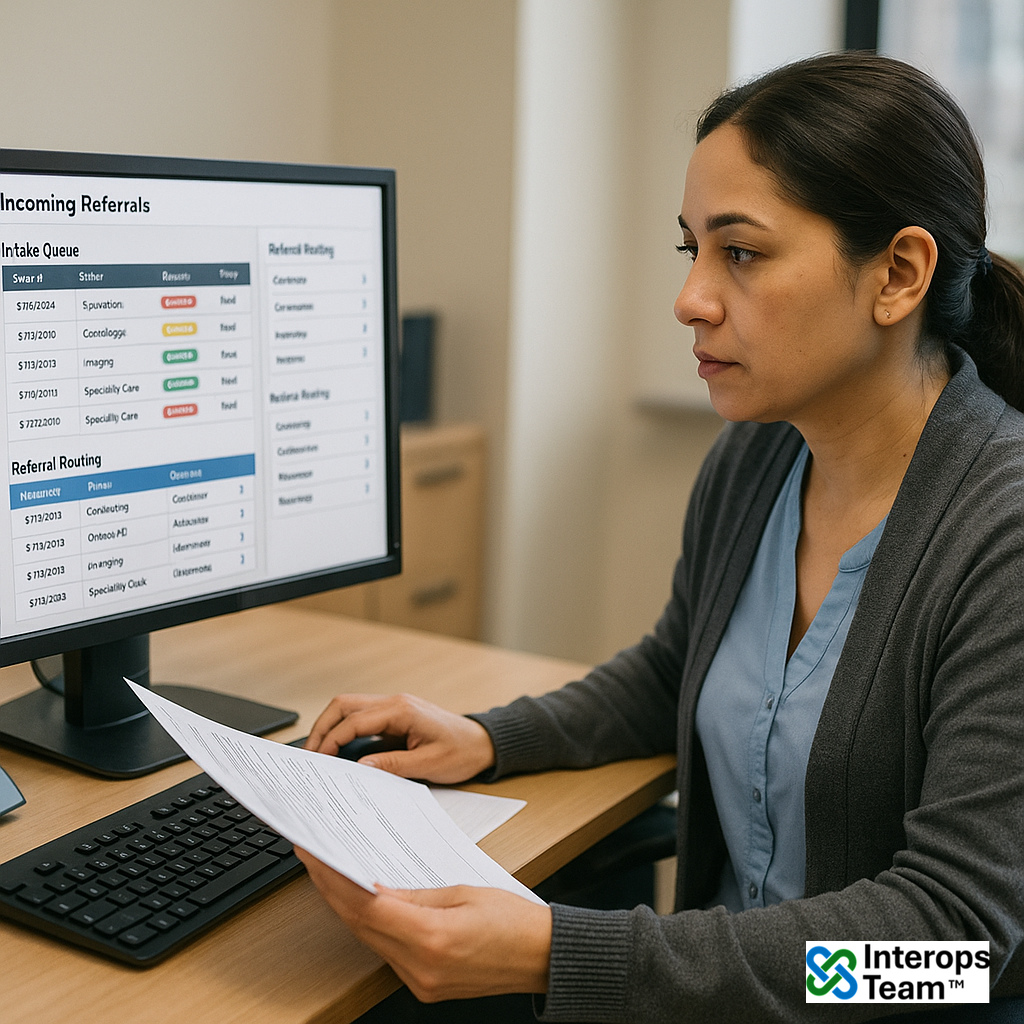
The Referral Intake & Triage module replaces fragmented manual queues with a unified intake console that consolidates incoming referrals from fax, email, and eReferral sources. Each referral is automatically validated for completeness, demographics, clinical documentation, payer details, before being routed to the appropriate specialty, service line, and location based on configurable business rules.
Intake staff gain visibility into every pending referral, along with SLA indicators, missing-information flags, and priority levels. Referrals that fail completeness checks are flagged for follow-up, while high-priority cases are automatically escalated to scheduling or triage teams. This approach reduces manual sorting, eliminates redundant communication loops, and helps organizations move from referral receipt to scheduling readiness faster and more consistently.
Benefits
- Fewer back-and-forths: Completeness validation ensures referrals reach the right destination the first time, minimizing clarification calls and lost paperwork.
- Faster scheduling readiness: Automated routing and triage rules accelerate turnaround time from receipt to appointment scheduling.
- Balanced workload distribution: Dynamic queueing and SLA visibility help leaders allocate staff efficiently across service lines and facilities.
- Improved transparency and compliance: Every referral is timestamped, categorized, and auditable, meeting internal policy and payer requirements.
Key Capabilities
- Unified referral intake console aggregating fax, email, and eReferral sources.
- Rule-based routing by specialty, location, payer, and clinical priority.
- Automated completeness checks for demographics, documentation, and authorization data.
- Configurable SLA timers, escalation triggers, and ownership handoff logic.
- Queue filtering and analytics dashboards for workload balancing and throughput visibility.
- Audit-ready tracking of all referral actions and outcomes.
Great for
- Referral Coordinators & Scheduling Teams: Manage all inbound referrals in one place with automated validation, routing, and SLA tracking for faster patient onboarding.
- Health Information Management (HIM) and Compliance Leads: Strengthen documentation integrity and audit readiness with standardized intake workflows and verifiable completeness checks.
- Clinical Informatics and EMR Analysts: Define and govern routing logic, monitor performance, and surface bottlenecks or anomalies using analytics overlays and triage dashboards.
- Service Line Leaders and Operations Managers: Gain real-time visibility into referral volumes, turnaround metrics, and workload distribution across sites and specialties.