


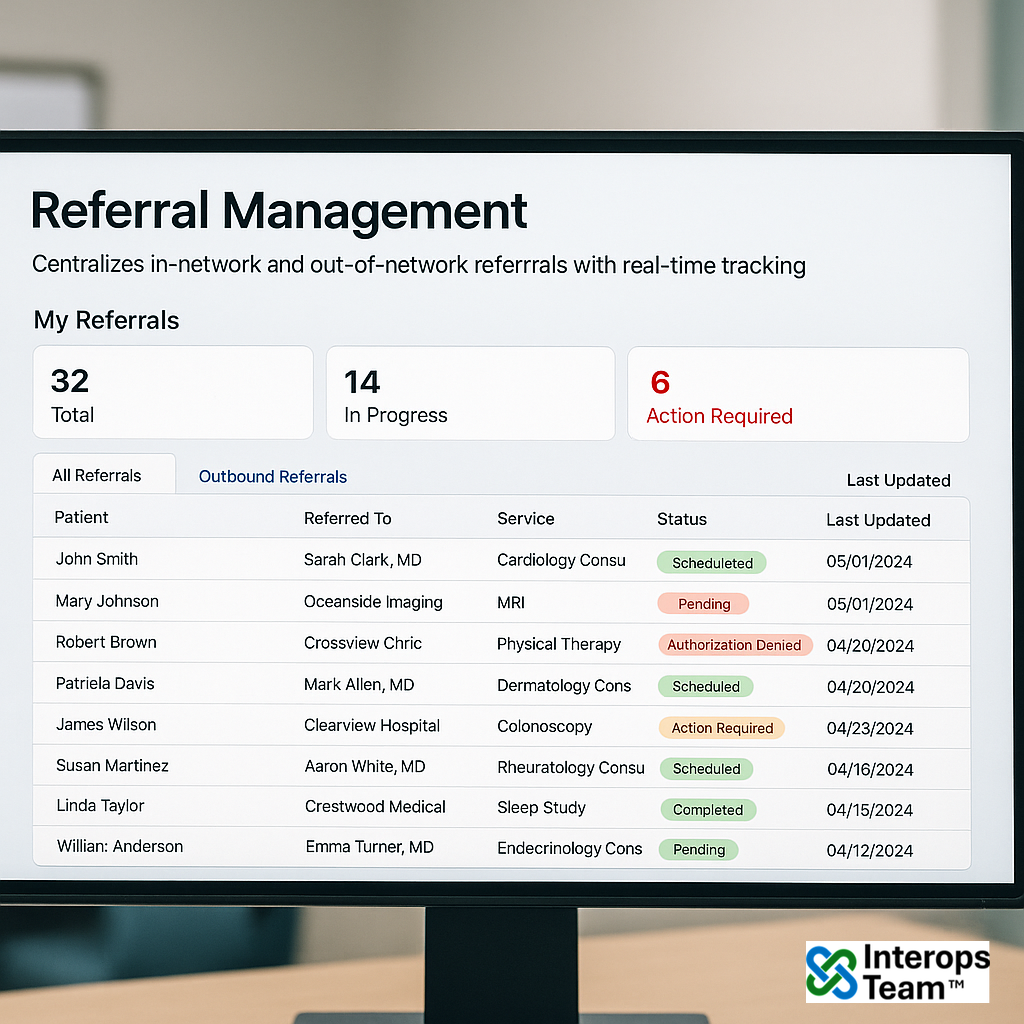
The Referral Authorization Tracker gives staff a single, authoritative view of every authorization tied to a scheduled service or referral. By integrating payer data, EMR scheduling feeds, and documentation workflows, it automatically surfaces authorization status, expiration dates, and missing attachments, long before a patient arrives for service.
Each referral displays a visual timeline showing request, submission, approval, and expiry milestones. Alerts and reminders notify teams when authorizations are pending or near expiration, while attachments (clinical notes, images, forms) are tracked to ensure completeness. With real-time visibility and clear accountability, organizations can eliminate day-of-service denials and protect both patient access and revenue integrity.
Benefits
- Fewer day-of-service surprises: Ensures required authorizations and documentation are secured and valid before the patient encounter.
- Higher first-pass success: Prevents denials by keeping authorizations, notes, and attachments in sync with scheduled services.
- Clear accountability: Assigns ownership and escalation paths for every open authorization task across service lines.
- Improved audit readiness: Maintains a timestamped trail of every authorization update, renewal, and supporting artifact.
Key Capabilities
- Interactive authorization timelines per referral showing request, pending, approval, and expiry states.
- 278 message integration for electronic prior auth status and response updates.
- Attachment and notes tracking for payer submissions, renewals, and appeal packets.
- Automated alerts and reminders for expiring authorizations and incomplete requirements.
- Role-based worklists and dashboards for open, pending, and completed authorizations.
- Audit-ready export and linkage to referral and scheduling records for HIM and revenue cycle review.
Great for
- Referral Coordinators and Authorization Teams: Track and manage prior auths in real time with clear ownership, expiration alerts, and attachment visibility across all service lines.
- Health Information Management (HIM) and Revenue Integrity Teams: Protect access and reimbursement by preventing expired or incomplete authorizations through structured tracking and documentation.
- Clinical Informatics and EMR Analysts: Govern 278 message workflows, monitor authorization timing, and support operational dashboards that highlight bottlenecks and completion trends.
- Operations and Scheduling Leaders: Ensure no patient arrives without an active authorization, using integrated SLA timers and escalation logic.