


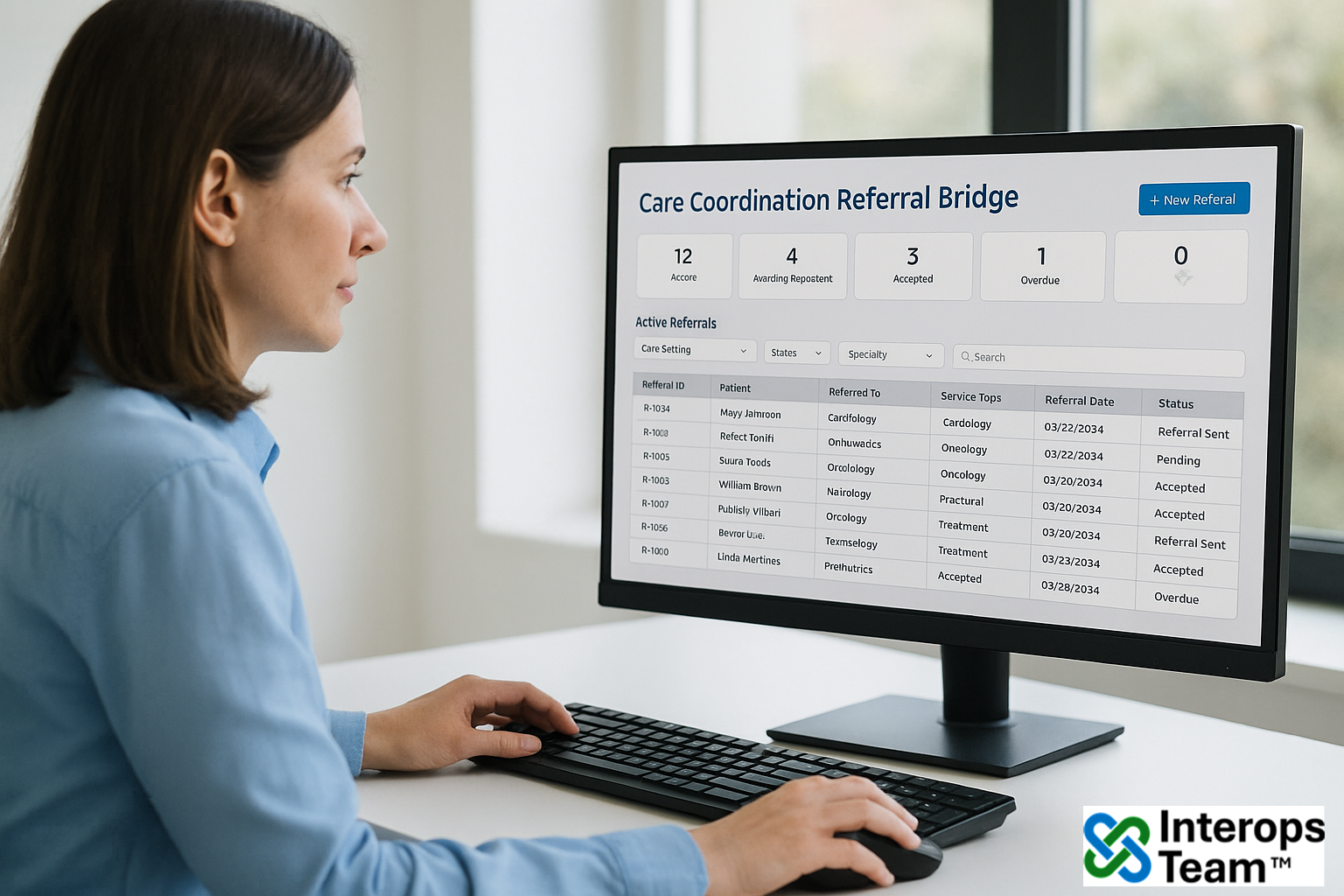
The Care Coordination Referral Bridge eliminates the gap between coordination and referral workflows by linking task queues, status updates, and ownership tracking across systems. It ensures that when a referral is placed or accepted, both sides, sending and receiving, see the same patient context, progress, and follow-up tasks without manual reconciliation or duplicate data entry.
Built on IHE 360X and DirectTrust messaging standards, the bridge supports structured handoffs between providers, payers, and community organizations. Each referral includes clinical context, attachments, and tracking metadata that flow automatically between systems, ensuring a truly closed-loop referral experience. When updates occur (accepted, on hold, complete), they synchronize back into the care coordination console in real time.
Benefits
- Eliminates duplicate effort: Reduces double entry and manual status tracking by synchronizing referral and coordination systems automatically.
- Improved transparency: Keeps both sender and receiver informed of status changes, ownership, and next steps in real time.
- Streamlined patient experience: Ensures continuity of care through clear accountability and timely follow-up at every transition.
- Regulatory alignment: Supports HIPAA, DirectTrust, and IHE 360X standards for secure, standards-based exchange of referral information.
Key Capabilities
- Task synchronization between care coordination and referral management platforms.
- Bidirectional status updates using IHE 360X and DirectTrust message payloads.
- Ownership reconciliation logic for clear accountability across organizations.
- Referral-to-task mapping with timestamped audit trail and message provenance.
- Configurable routing rules to support internal, external, and payer-connected referral pathways.
Great for
- Care Coordinators and Referral Teams: Collaborate on shared patients across departments or partner organizations with synchronized tasks, updates, and completion tracking.
- Compliance and HIM Leaders: Maintain defensible referral documentation and consistent patient ownership through closed-loop 360X messaging and reconciliation logic.
- Clinical Informatics and Interoperability Analysts: Govern routing logic, monitor data integrity, and visualize workflow performance using interoperability dashboards and audit overlays.
- Population Health and Network Management Teams: Gain visibility into referral leakage, turnaround times, and follow-up completion across care networks.