


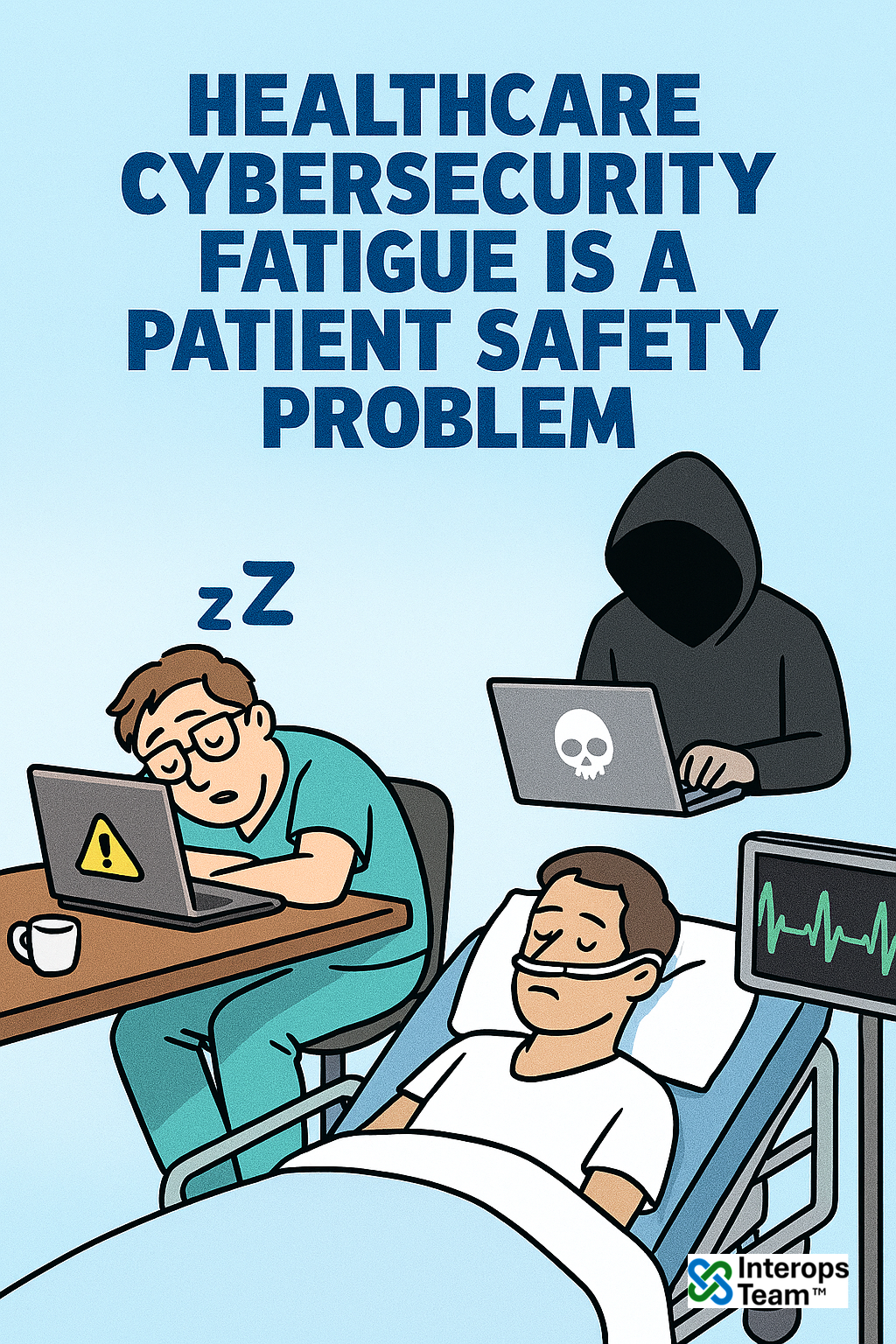
Healthcare organizations are surrounded by cybersecurity tools, assessments, and mandates, yet many teams quietly experience security fatigue. Alerts flow from multiple systems, phishing tests run continuously, and new controls are layered onto old ones without simplification. Over time, this creates a culture where security becomes background noise rather than a focused discipline. The danger is not just financial or reputational; when security is treated as an annoyance, it directly threatens patient safety.
Security fatigue emerges when staff are repeatedly asked to comply with complex or poorly explained controls that appear disconnected from clinical reality. Multi-step logins, mandatory password resets, pop-up warnings, and frequent tool changes can erode trust and engagement. Clinicians and operational staff begin to see security processes as obstacles to care, and they naturally look for workarounds to keep workflows moving. In an environment where seconds matter, security that is not designed for clinical context will be bypassed, not out of negligence, but out of necessity.
At the same time, leadership often receives security posture through dashboards and heat maps that obscure the day-to-day experience of users. Vendors emphasize coverage and features rather than cognitive load. Security teams, under pressure to respond to every new threat, introduce additional layers without retiring legacy processes. The result is a fragmented ecosystem of overlapping tools, inconsistent policies, and unclear accountability. No one owns the end-to-end experience, so fatigue is treated as a user problem instead of a design problem.
To address cybersecurity fatigue, healthcare organizations must treat security like any other clinical safety initiative. Controls should be evaluated for workflow impact, simplified wherever possible, and explained in the language of patient safety rather than technical compliance. Reducing redundant tools, consolidating policies, and embedding security into intuitive workflows can restore trust and engagement. When staff understand that security exists to protect patients, not to slow them down, it transforms from a burden into a shared responsibility.
Turning security fatigue into safer workflows
Interops Team™ helps organizations plug into stronger cybersecurity practices without overwhelming clinicians. We focus on securing the real-time data paths that matter most for patient safety, so security controls feel supportive instead of burdensome.
- Map clinical workflows to security controls that minimize clicks and disruption
- Harden interface engines, APIs, and FHIR endpoints that carry PHI
- Design alerting and incident response tuned to clinical impact