


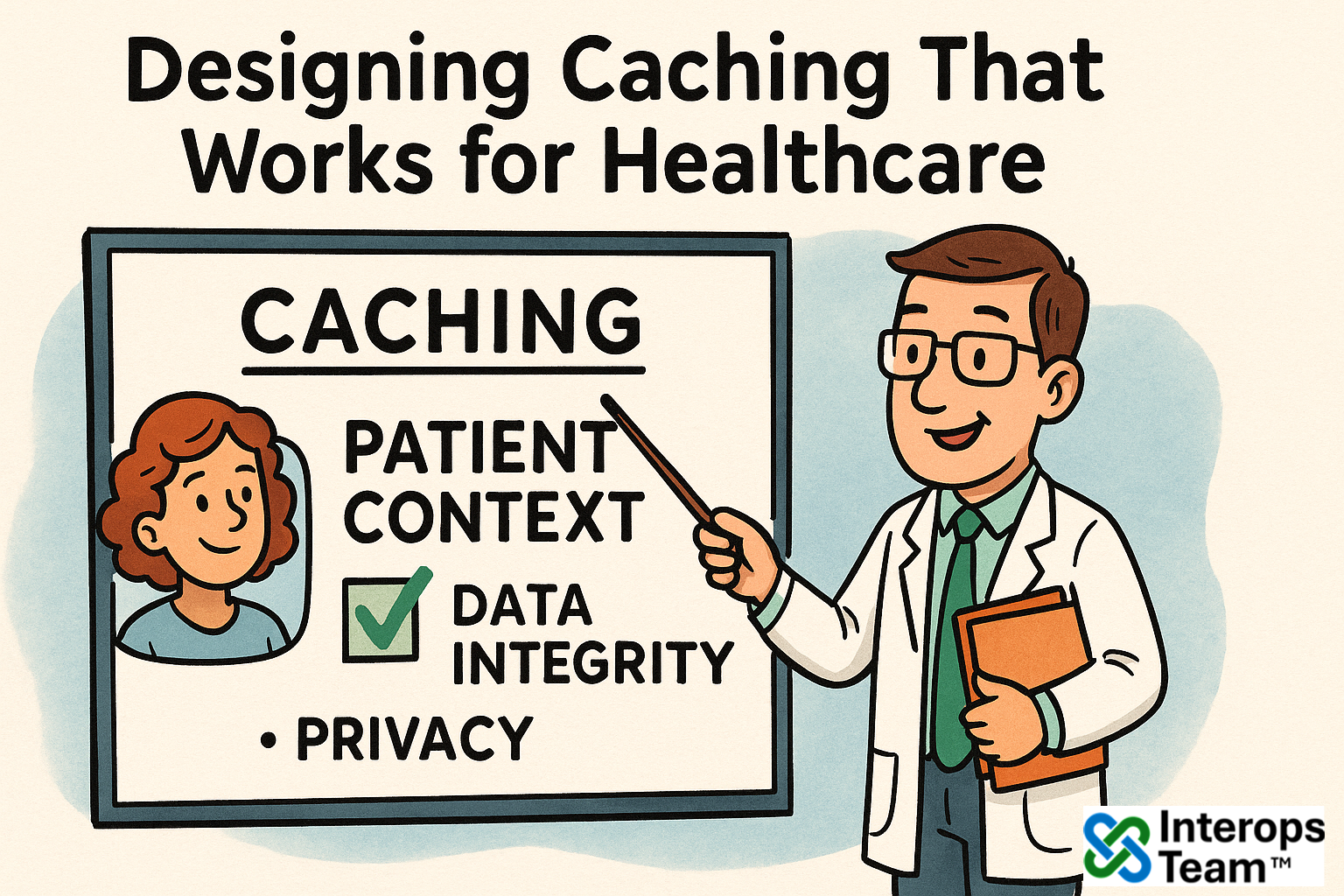
Caching in healthcare is often treated as a background optimization, configured once and then forgotten. In many industries, this approach works well: select a set of images, documents, pages, or API responses, hand them off to a CDN or cache layer, and done.
Healthcare, however, operates under different conditions. When caching intersects with active patient records, documents, identity, or visit workflows, it directly influences whether systems reflect reality. Records evolve. Results are corrected. Notes are amended. Access is revoked. If cached content is out of sync with the source of truth, risk is introduced.
The good news is that caching can be highly effective in healthcare when designed intentionally. With the right approach, it enhances responsiveness while maintaining trust. Success depends on treating caching as a functional requirement rather than a non-functional afterthought.
During an active patient visit, from scheduling through the encounter and into post-visit activity, data remains dynamic. Appointments are rescheduled, demographics are updated, insurance eligibility is rechecked, lab results are posted and sometimes corrected, clinical notes are amended, orders are discontinued, and access rights can change as care teams shift. Patient-specific information in this context requires clear rules for scope, revalidation, and invalidation. Any system capable of serving a document must also demonstrate the ability to deprecate or purge the document when it becomes outdated, corrected, merged, or no longer authorized.
This is especially critical for privacy and incident response. Correcting an issue at the source system is only part of the solution. Cached representations, sessions, and tokens must be invalidated, or outdated information may remain quietly accessible.
The bottom line, for active patient visits, if content cannot be confidently revalidated or purged, it should not be cached. Designing caching strategies around clinical workflows rather than generic web defaults produces systems that are fast, accurate, and worthy of patient trust.
Intentional caching for patient reality
Interops Team™ helps organizations design caching strategies that improve performance without compromising data integrity or privacy. We align caching behavior to real clinical workflows, not generic infrastructure defaults.
- Classify what can be cached vs. what must be revalidated or never cached
- Align TTL and revalidation rules to the active visit lifecycle
- Design purge and invalidation paths for corrections, merges, and access changes