


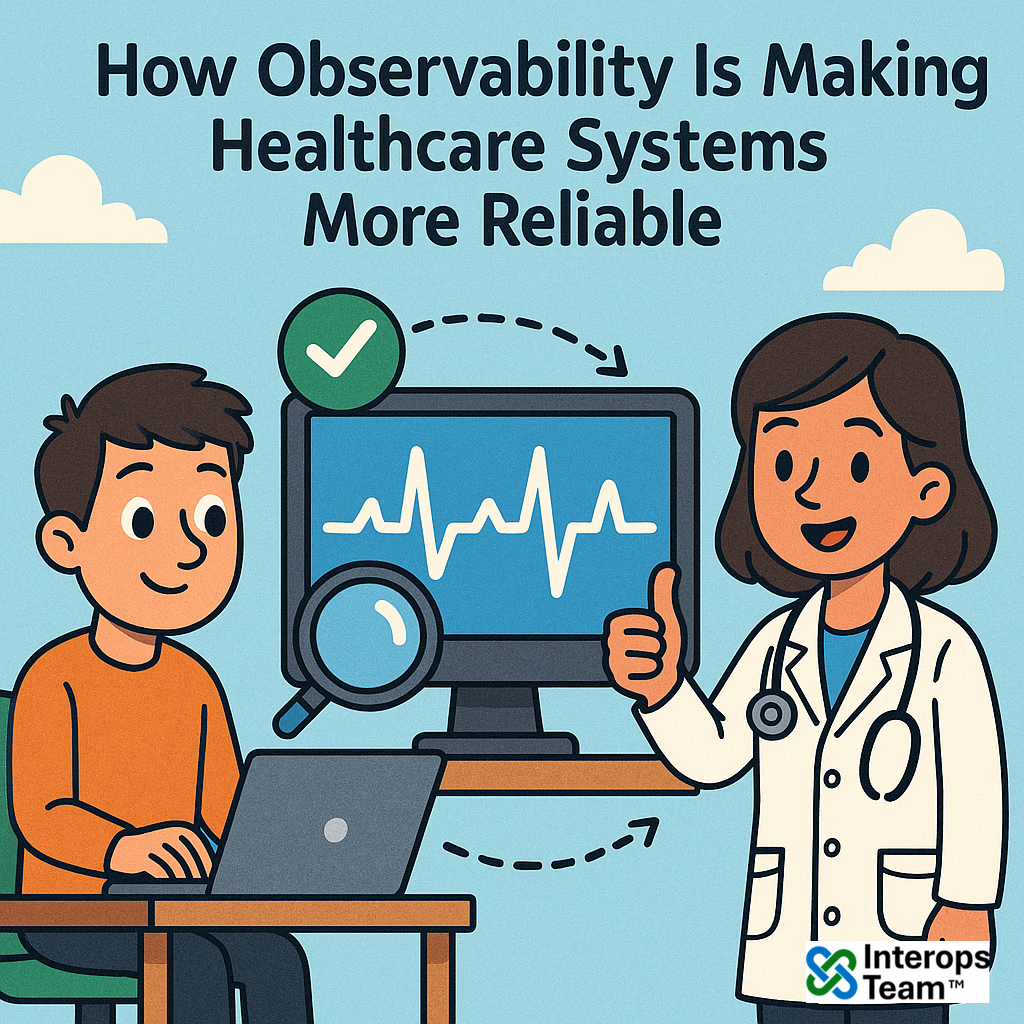
In the past, healthcare IT teams often learned about problems only when clinicians called the help desk. Monitoring focused on servers and basic uptime, not on the actual experience of users. Today, observability changes that. By showing how applications, interfaces, and APIs behave in real time, observability platforms help organizations catch issues earlier and keep important workflows running.
Application traces and metrics now let teams see where delays happen inside complex transactions. Instead of guessing whether the issue is in the EMR, the network, or a downstream service, engineers can find the exact component that is misbehaving and fix it quickly. This reduces downtime and shortens slowdowns that are hard for users to explain but easy to feel.
Observability also improves integration. Interface engines, FHIR gateways, and event streams can be tracked for message volumes, transformation times, and error patterns with much greater precision. When something unusual appears, teams can investigate before it spreads, protecting both clinical workflows and data quality.
Dashboards built on observability data are becoming more useful too. Instead of generic charts about servers, healthcare organizations design views that match clinical journeys, such as admission to discharge or order to result. This helps IT and clinical leaders share a common language about system health.
The result is a more proactive posture. Rather than waiting for trouble tickets, teams can use observability to anticipate issues, confirm improvements, and build confidence that the digital foundation of care is stable and resilient.
Making System Health Visible
- Real-Time Insight: Instruments applications, APIs, and interfaces so issues are caught before users feel them.
- Transaction Tracing: Provides clear visibility into where delays occur, reducing downtime and speeding resolution.
- Integration Monitoring: Tracks message volumes, transformation times, and error patterns across FHIR gateways and interface engines.
- Clinical Dashboards: Builds views aligned with patient journeys, helping IT and clinical leaders share a common language.
- Proactive Posture: Enables teams to anticipate problems, validate improvements, and keep workflows resilient.
With Interops Team™ guiding observability adoption, healthcare organizations move from reactive firefighting to proactive confidence in their digital foundation.