


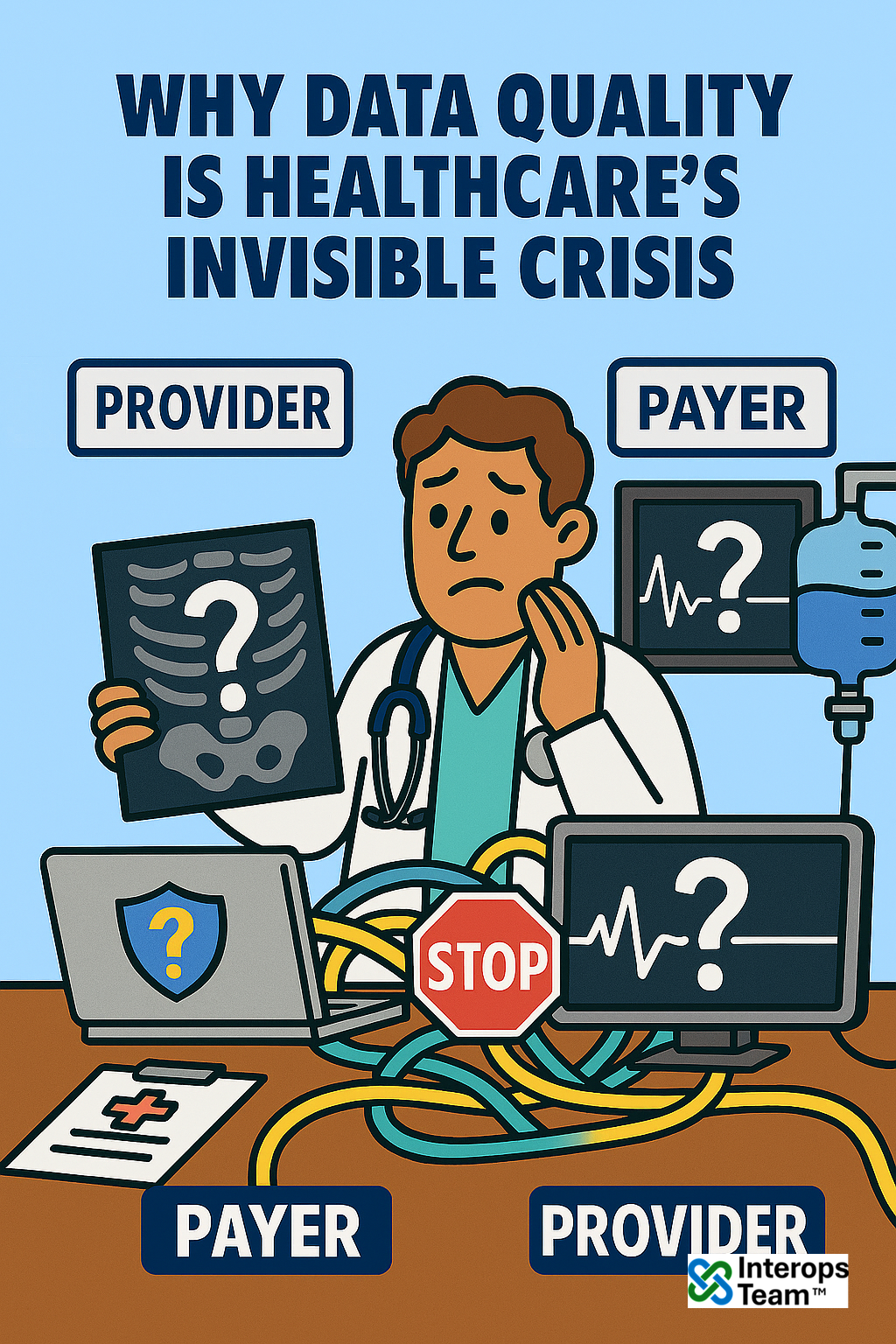
Data quality is too often not a priority and not considered critical to the successful deployment of healthcare integrations and apps. Hospitals and companies spend big on analytics, AI, and digital tools, but the data behind those systems is often messy, incomplete, or not clinically accurate and not built on a "trusted core" base. In healthcare, you can’t guess, or use "close enough" data, deriving, altering and comingling data in way where it loses its context and may even be misleaindg. Doctors need precise, trusted information to make safe decisions. If the data is bad, everything built on it, downstream use cases, dashboards or even AI, can give wrong or even dangerous results.
Clinical Data Is Different
Healthcare data isn’t just technical, it’s clinical. For example, a blood pressure reading only makes sense if you know how it was taken, when, by whom, and why. A diagnosis code matters only if it’s entered by the right clinician at the right time for the right reason. Many organizations treat data like a generic product, ignoring the clinical workflow, context and the clinical nuances that went into creating it. This leads to systems that lose important context, mislabel values, or distort meaning.
Rules and Risks
Healthcare also has strict rules. HIPAA, CMS, ONC, and HL7 all require data to be accurate and traceable. These aren’t suggestions, they’re legal and clinical protections. If organizations cut corners or use poor-quality data, leverage untrained resources, they risk breaking the rules and harming patients.
The Solution
To solve the problem, we need to treat data quality as a clinical issue, not a technical issue. That means:
- Using accurate workflows aligned with real clinical processes and roles.
- Documenting correctly with timely, complete, and clinically valid entries.
- Following data standards such as HL7, FHIR, LOINC, RxNorm, and SNOMED CT.
- Creating governance that includes business, compliance, and frontline business, clinical and technical teams, those who have worked in care settings and deeply understand clinical context and how it is applied to healthcare industry standards.
- Leveraging resources who bring true clinical context—professionals trained and experienced in care settings who understand the complex nuances of clinical data and how to apply healthcare industry standards and best practices.
- Applying healthcare industry standards and best practices with deep clinical insight, including effective communication between clinical and technical teams, bridging gaps through shared experience.
Bridging clinical and technical expertise
Our Interops Team™ specializes in bridging clinical and technical expertise to improve healthcare data quality. We provide strategic guidance, compliance support, and hands-on solutions tailored to your organization's unique needs.
- Clinical workflow alignment and optimization
- Data governance and compliance frameworks
- Custom integration and interoperability solutions