


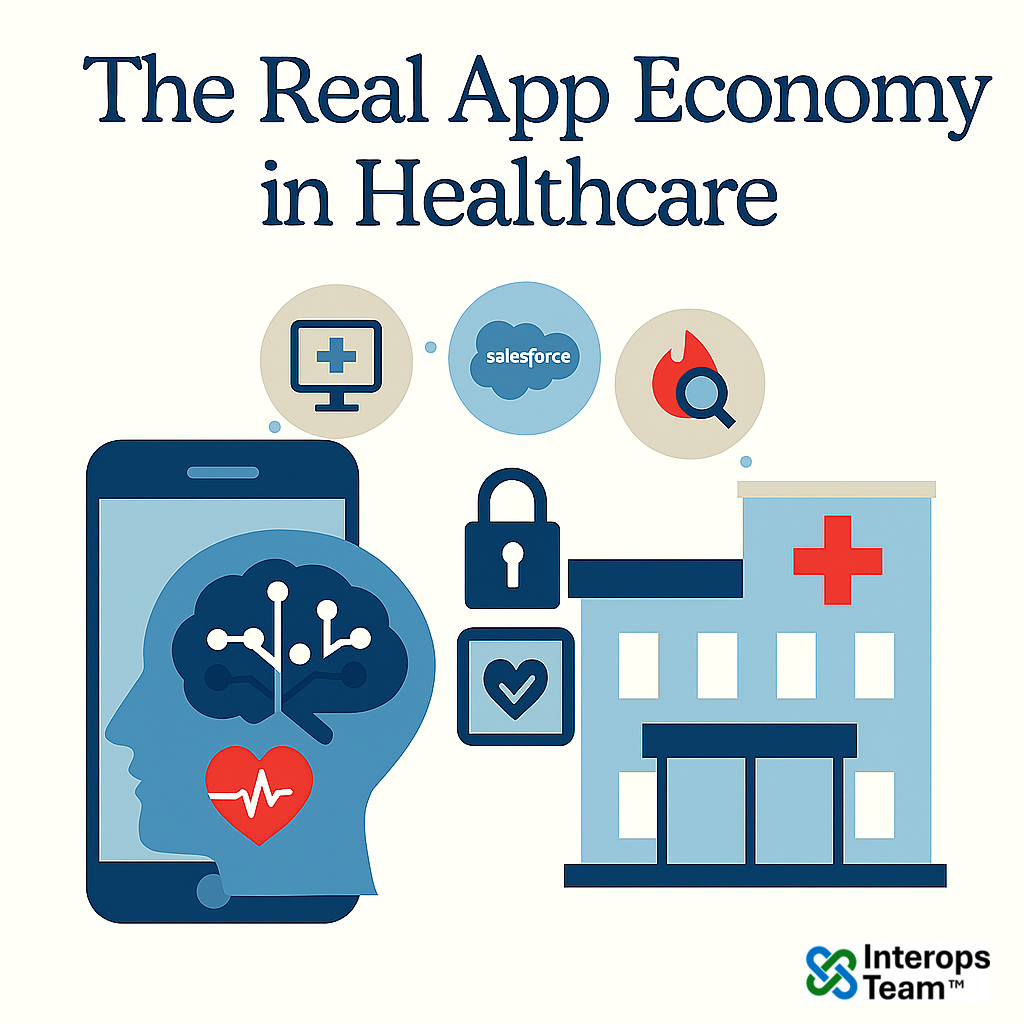
Most people think of apps as things you download from places like the Apple App Store or Google Play. But in healthcare, the app world is much bigger and more complex. Many healthcare apps don’t show up in public stores. Instead, they are offered by EMR vendors like Epic Showroom or Oracle Healthcare Marketplace, or by other vendors that offer downstream healthcare solutions like Salesforce AppExchange (Saleforce HealthCloud). These apps may authenticate and access EMR patient data using SMART on FHIR standards.
These apps aren’t just simple tools. They connect with real-time patient data, use special APIs like FHIR, track health outcomes, and follow strict rules. Examples include:
- A blood pressure monitor that sends data directly to a patient’s record
- A care-gap tool that helps doctors spot missing treatments
- A remote health app that works with Apple Health Records
- A fitness tracker that syncs with Google Fit
Some view app development like it’s just for phones. But building healthcare apps takes more than that. It needs smart design for sharing data, strong security, and a deep understanding of how health systems and EMRs work. Apps must be HIPAA compliant and in some cases be built for patient health and safety to fit nicely into clinical workflows. If not, they might look cool but won’t work safely or at scale and may never be approved for production deployment.