


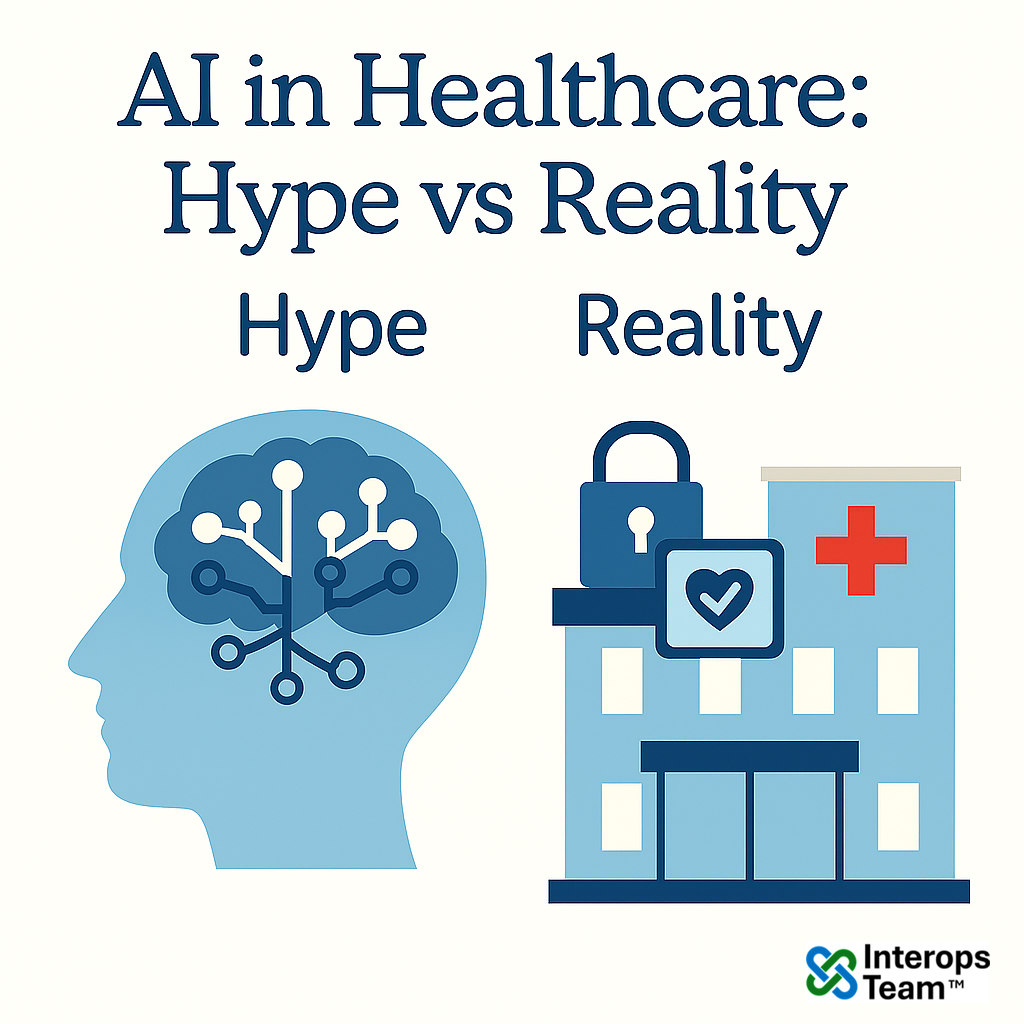
Artificial intelligence (AI) is often advertised as the next big thing in healthcare. Companies say their tools give “AI-powered insights,” but most of their solutions don’t work safely enough for real medical use.
The Data Problem
AI works best when it has clean, organized, and complete data. In healthcare, data is often scattered across different systems, coded in inconsistent ways, and limited by strict privacy rules like HIPAA, as well as requirements around patient health and safety. HIPAA requires that data be traceable, accurate, and secure. Many AI systems don’t meet these standards, which makes them risky for patient care.
Where AI Actually Works
AI can succeed when it’s used in specific, well-defined areas with reliable data and clear rules. Examples include:
- Sepsis detection models inside electronic medical records (EMRs)
- Eye disease detection tools approved by the FDA
- Documentation assistants trained on carefully managed datasets
These tools work because they respect medical workflows, follow regulations, and use trustworthy data.
The Real Future of AI in Healthcare
AI won’t change healthcare through vague dashboards or mysterious predictions. It will succeed when hospitals and companies focus on:
- High-quality data
- Following regulations
- Fitting into real medical workflows
The future of healthcare AI is practical and grounded in reality—not hype.
FDA Approval and AI Use at Point of Care
The FDA has approved over 1,200 AI-enabled medical devices as of 2025. These devices, whether software or hardware, are considered medical devices when used at the point of care and are cleared for specific clinical uses primarily to assist healthcare professionals rather than replace their judgment. Most FDA-approved AI tools are designed to augment diagnostics, such as in radiology and cardiology, and are integrated into clinical workflows with safety and efficacy evaluations.
However, AI-enabled medical devices typically make recommendations or highlight possible conditions rather than provide deterministic conclusions. The FDA requires rigorous evaluation to ensure these AI tools are safe, effective, and used as intended, primarily as decision support to assist clinicians rather than replace their judgment.
For virtually any device or software to be approved by the FDA for use at the point of care or as part of medical decision-making, it often takes years of clinical trials and rigorous evaluation. This lengthy process ensures that devices meet high standards of safety and effectiveness before they are integrated into patient care.
This means AI can be part of medical devices and workflows but always under controlled conditions with clinician involvement. The future of AI in healthcare depends on balancing innovation with patient safety and regulatory compliance.
AI Use Away from Point of Care Without FDA Approval
AI can also be used in healthcare settings away from the point of care without FDA approval, where licensed professionals play a critical role. For example, speech-to-text tools assist clinicians by transcribing notes, but the licensed clinician or practitioner must validate and correct each sentence or paragraph to ensure accuracy.
Attempts to alert care providers based on AI findings, such as clinical decision support alerts, risk increasing unnecessary burden and alert fatigue. If the care provider is not directly involved in the process, alternative approaches are needed to manage AI-driven alerts effectively and avoid overwhelming clinicians.
Balancing AI assistance with clinician oversight is essential to maintain patient safety, reduce cognitive load, and ensure that AI tools support rather than hinder clinical workflows.
Closing Thoughts
AI in healthcare is a powerful tool with great potential, but it must be approached with caution, rigor, and respect for clinical expertise. The path forward lies in combining innovative AI technologies with the irreplaceable judgment of licensed healthcare professionals. By focusing on data quality, regulatory compliance, and thoughtful integration into workflows, AI can enhance care without compromising safety or adding undue burden.
Accelerating Interoperability with AI
Interops Team™ specializes in bridging the gap between cutting-edge AI technologies and practical healthcare applications. We help healthcare organizations navigate regulatory landscapes, design compliant AI workflows, and implement solutions that empower clinicians while safeguarding patients. Whether you need strategic guidance, technical integration, or compliance support, Interops Team™ is your partner for responsible, effective healthcare AI adoption.